BrainerHub Solutions

Cloud Bills Too High? On-Device GenAI and the Shift in SaaS Cost Structures

Generative AI has changed the economics of modern software. Many SaaS products now include AI features such as text generation, coding assistance, document analysis, or image creation. These capabilities depend heavily on model inference, which often runs in the cloud.

As usage grows, infrastructure costs increase rapidly. GPU workloads, model serving, and data transfer can significantly raise operating expenses. For many companies, the traditional cloud-centric architecture is placing pressure on margins.

A different approach is gaining attention: running generative AI models directly on user devices.

The Cost Pressure Behind Cloud-Based AI

Cloud infrastructure supports large-scale model training and high-performance inference. However, generative AI workloads require substantial computing resources. Each user interaction may trigger model execution on remote servers, which increases processing demand and operating cost.

When AI becomes a core product feature, the cost per user can grow faster than subscription revenue. SaaS companies then face a difficult balance between expanding AI capabilities and maintaining sustainable pricing.

This situation has encouraged many teams to reconsider how and where AI workloads should run.

The Shift Toward On-Device Generative AI

Recent improvements in hardware acceleration and model optimization have made it possible to run smaller generative models directly on consumer devices. Smartphones, laptops, and edge devices now include processors designed for machine learning workloads.

With these capabilities, part of the inference process can run locally instead of relying entirely on cloud servers. Applications can perform text generation, summarization, or recommendation tasks directly on the device while reserving cloud resources for heavier workloads.

This architecture changes the cost structure of AI-powered software.

Performance and Privacy Improvements

Local inference reduces the delay created by sending requests to remote servers. Responses can be generated more quickly because the processing occurs close to the user. This can improve the experience for tools that rely on frequent interactions such as productivity assistants, writing tools, and developer utilities.

Privacy is another factor. When models run on-device, sensitive information does not always need to leave the user’s environment for processing. Organizations that manage confidential data often prefer solutions that reduce external data transfer.

These benefits make on-device AI attractive for enterprise software as well as consumer applications.

Implications for SaaS Pricing Models

Traditional SaaS pricing assumes relatively stable infrastructure costs per user. Generative AI disrupts that assumption because heavy AI usage directly increases compute consumption.

On-device inference shifts part of the processing cost away from centralized infrastructure. Cloud systems remain important for model distribution, updates, storage, and large-scale processing. However, routine inference can occur locally.

This distribution of workloads can stabilize operational costs and allow SaaS companies to include AI capabilities without large increases in subscription pricing.

The Role of Hybrid AI Architectures

Most AI-powered products will rely on a hybrid structure that combines cloud services with on-device processing. Large models, training pipelines, and complex tasks will continue to run in cloud environments with specialized hardware.

Optimized models running on user devices can handle frequent interactions and lightweight inference. The result is a balance between performance, cost control, and data protection.

Technology teams are increasingly designing systems that support this combination of edge and cloud computing.

Preparing Products for On-Device AI

Adopting this approach requires changes in system design. Models must be optimized for efficient execution on limited hardware. Techniques such as quantization, compression, and lightweight architectures help reduce memory and compute requirements.

Teams must also build reliable mechanisms to distribute model updates and maintain consistent behavior across devices. Security and version management become important parts of the deployment process.

Organizations that invest in these capabilities can integrate AI features while maintaining predictable infrastructure costs.

Conclusion

Generative AI has introduced new operational demands for SaaS platforms. Cloud infrastructure remains essential, but relying exclusively on remote inference can lead to rising expenses as AI usage expands.

Running generative models on user devices offers a practical alternative for many workloads. Faster response times, stronger privacy protection, and lower centralized compute demand contribute to a more balanced architecture.

As AI becomes a standard feature in software products, on-device inference will play an important role in controlling costs and supporting long-term product growth.

Do you have a project in mind? Talk to the experts.

    +91


    Allow only .jpg, .png, .pdf (max 5MB)


    Get in Touch

    We’d love to resolve your queries with personalized assistance.

    Our Office

    D-101/102/501/601 Titanium Square Building, Near Thaltej Cross Road, Sarkhej - Gandhinagar Highway, Ahmedabad, Gujarat 380059

    Leave a Comment

    Your email address will not be published. Required fields are marked *

    Scroll to Top

      +91


        +91


        Project Management Software

        Admin Dashboard

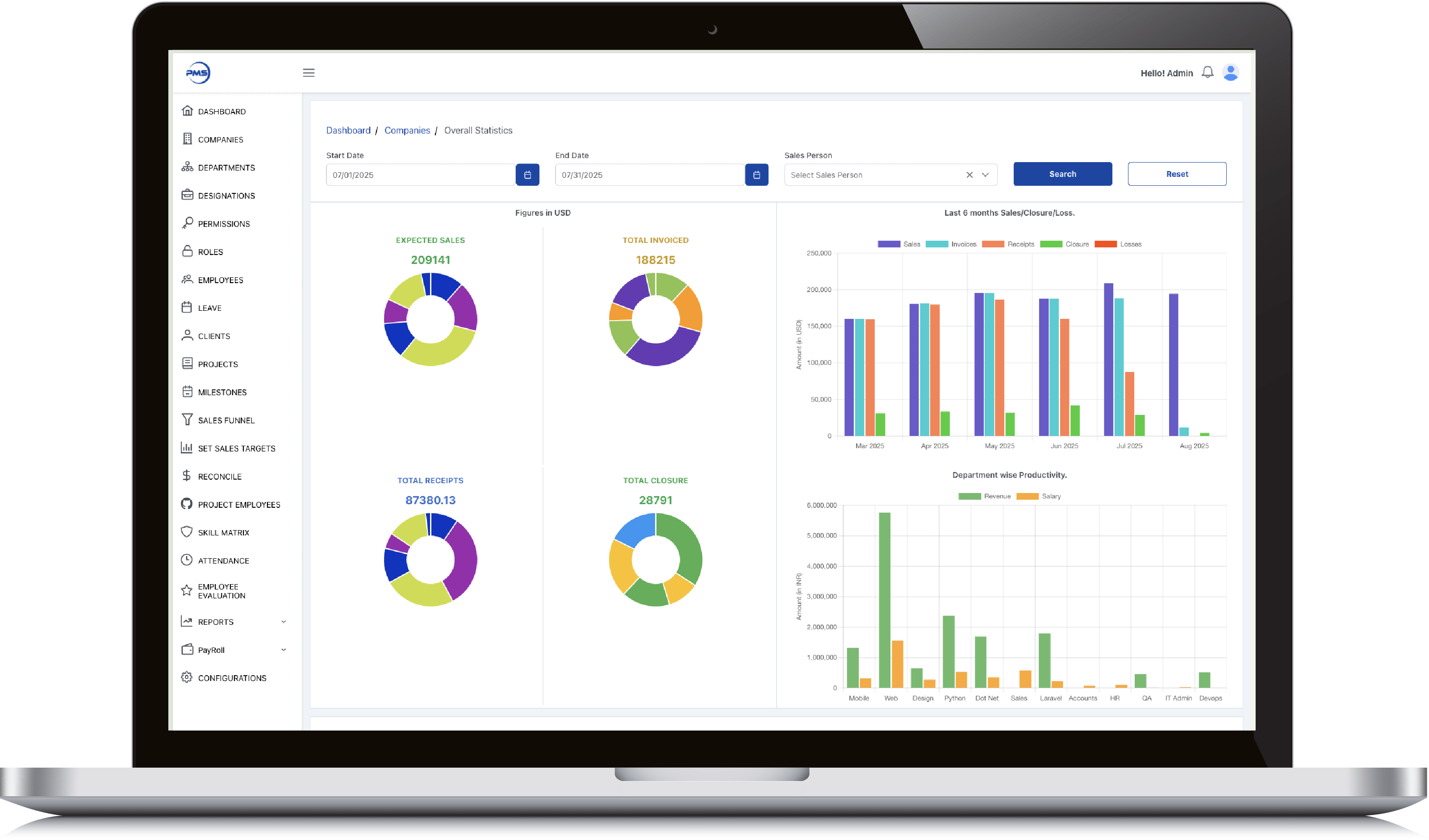
        • Smart date and salesperson filters let you slice performance data exactly how you need it.

        • Donut charts give instant clarity on expected sales, invoices, receipts, and closures.

        • 6-month comparative bar graph reveals trends across sales, receipts, and losses effortlessly.

        • Track department productivity by comparing revenue generated vs salaries paid out.

        • View 12-month earnings history in a clean graph to support long-term financial planning.
        Admin Dashboard

        Admin Dashboard

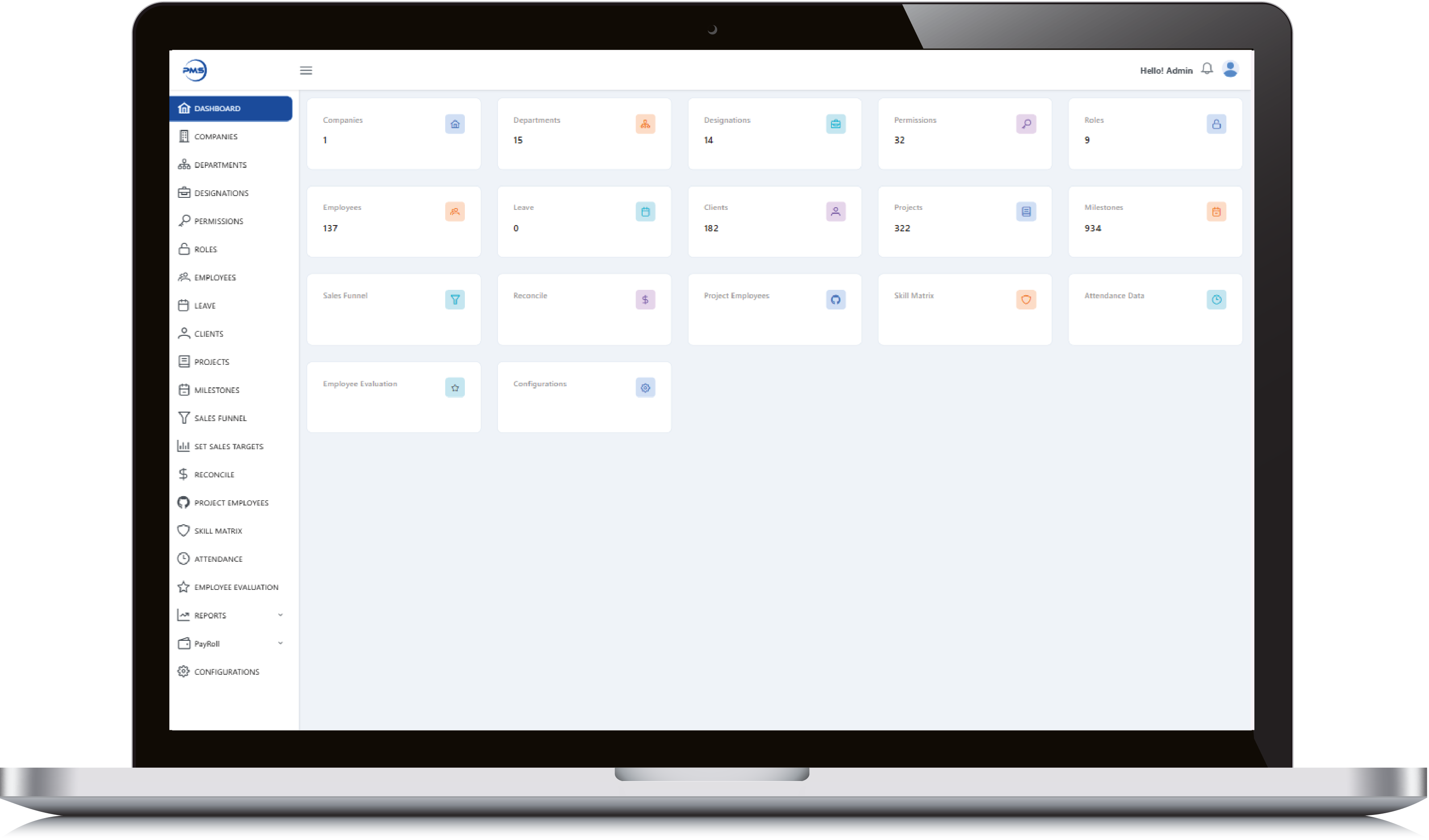
        • Get a high-level snapshot of all key modules, from employees to milestones, in one glance.

        • Quick-access tiles let you jump into clients, projects, and departments without extra clicks.

        • Live data counts keep you updated on active users, leaves, roles, and more in real time.

        • Manage critical HR, project, and evaluation tools from a single, centralized control panel.

        • Minimalist, card-based design ensures clean navigation and quick insights for admins.
        Admin Dashboard

        Employee Dashboard

        • Evaluate employees with performance metrics across key criteria like feedback, efforts, and productivity.

        • Dynamic date and employee filters let you generate custom performance reports instantly.

        • Donut charts display category-wise and overall performance scores with clean visual clarity.

        • Track monthly performance trends through interactive, color-coded bar graphs.

        • Seamless interface ensures HR and managers can assess and compare evaluations effortlessly.
        Employee Dashboard

        Employee Dashboard

        • Track individual sales goals with a detailed breakdown of employee-wise yearly targets.

        • Quickly add, edit, or delete target entries using intuitive action icons.

        • Sort and search functionality enables fast access to specific target data.

        • Dual-tab view for switching between Yearly and Monthly targets effortlessly.

        • Clear date ranges and value indicators help monitor performance alignment throughout the year.
        Employee Dashboard

        Realinvestoo

        Admin Panel Feature

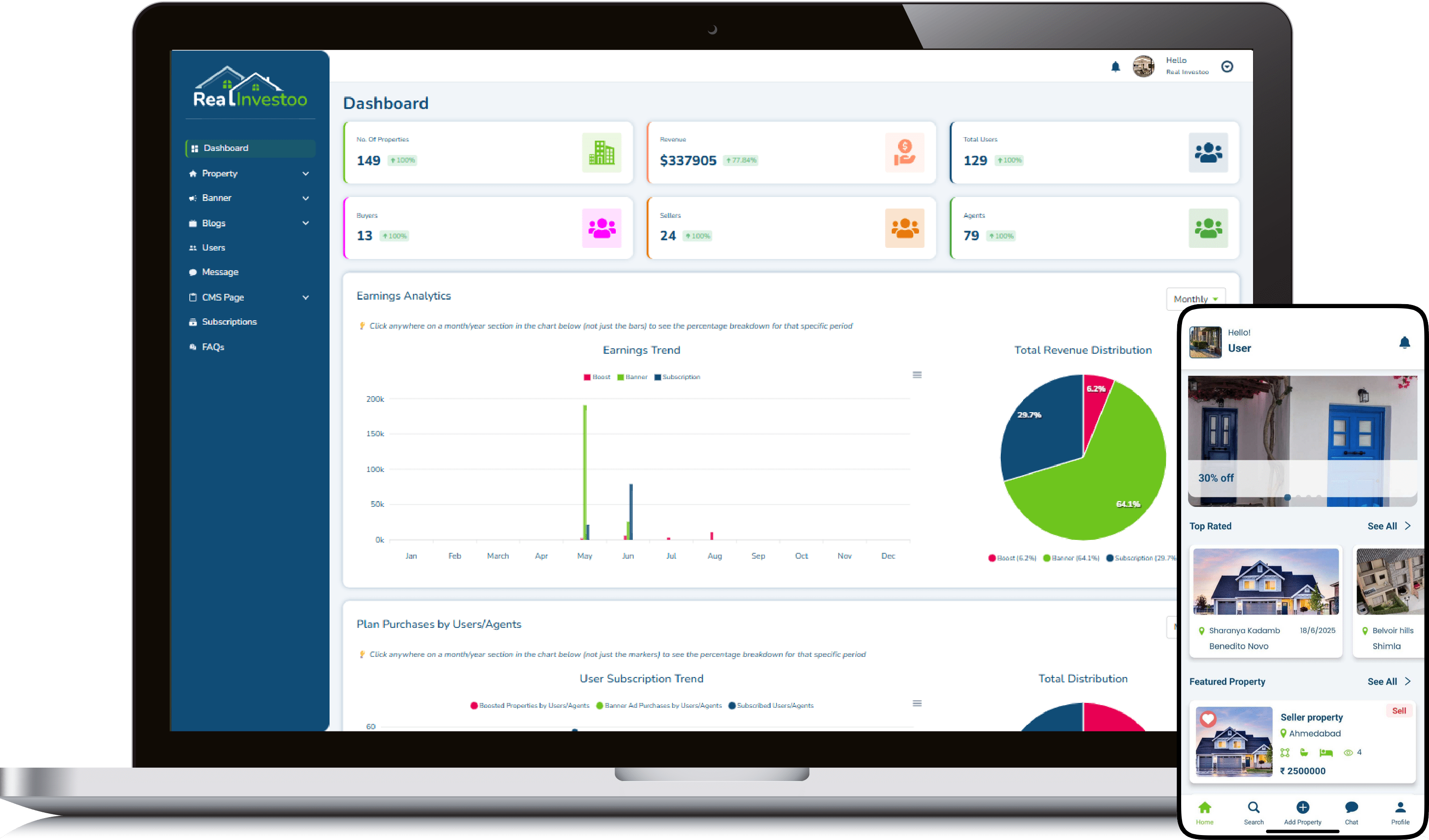
        • Intuitive dashboard gives instant insights into users, properties, revenue, and agents.

        • Real-time earnings analytics with monthly trend and pie chart breakdown.

        • Smart revenue categorization by Boost, Banner Ads, and Subscriptions.

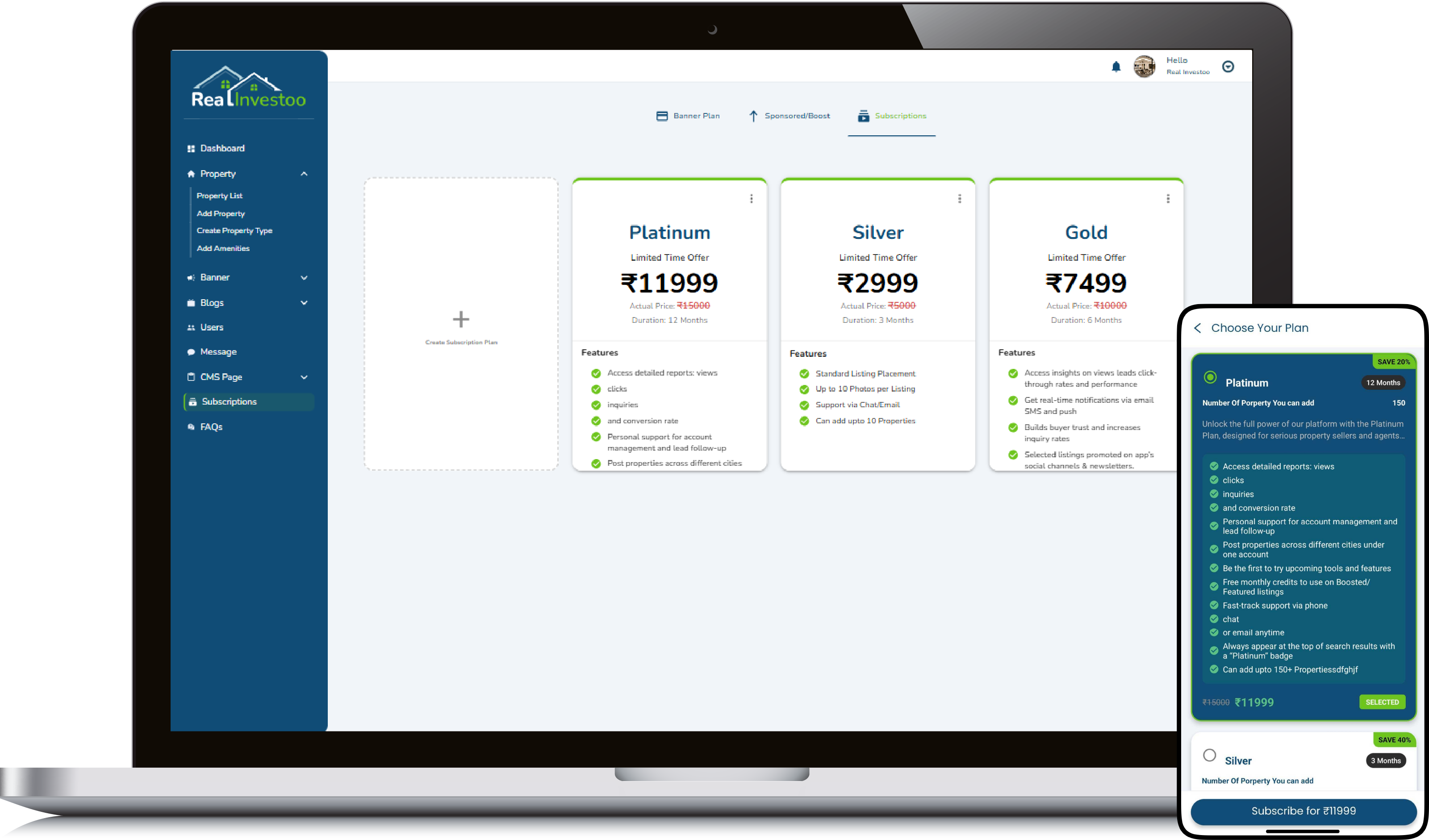
        • Fully manageable CMS, banners, blogs, messages, and subscriptions from one panel.

        • Role-based user tracking: buyers, sellers, and agents with total user count.
        Admin Panel Feature

        Admin Panel Feature

        • Seamlessly manage every listed property with edit, view, and delete at your fingertips.

        • Smart filters, real-time search, and draft visibility make property management effortless.

        • Instantly track property type, status (Sell/Rent/Lease), location, and views in one clean table.

        • Admin-level control with instant updates across 69+ properties, scale made simple.

        • Visual status tags (Sell, Lease, Rent) make portfolio oversight intuitive and quick.
        Admin Panel Feature

        User Feature

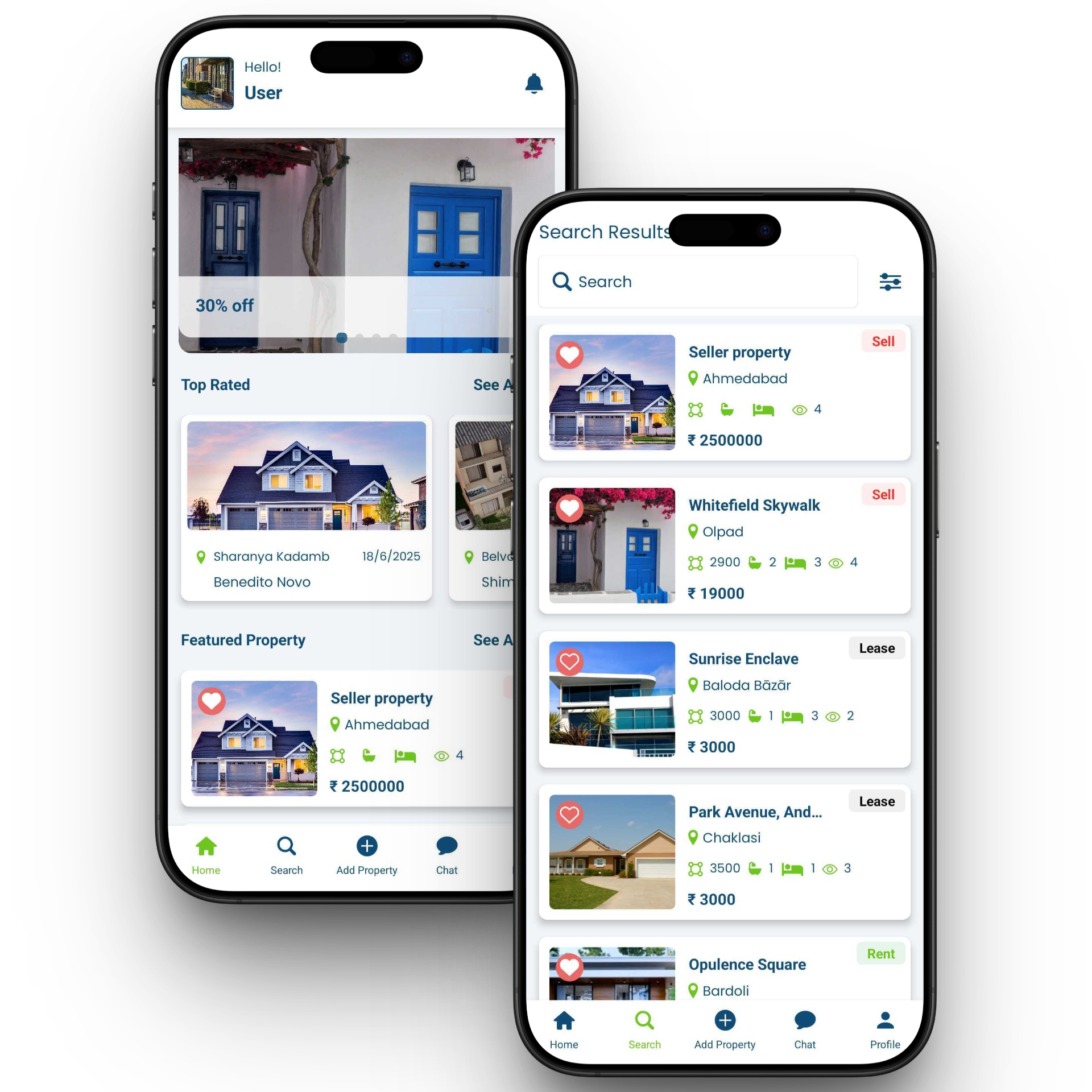
        • Personalized dashboard with user greeting and clean UI.

        • Discover top-rated properties with location and availability.

        • Highlighted featured listings with price, stats, and lease tag.

        • Easy bottom navigation for home, search, add, chat, and profile.

        • Detailed property cards with date, location, and images.
        User Feature

        User Feature

        • Powerful property search with location-based results.

        • Clear Sell, Lease, and Rent status tags on listings.

        • Favorite/heart feature for saving preferred properties.

        • Compact listing cards with area, beds, baths, and view count.

        • Integrated price display for instant decision-making.
        User Feature

        Food Delivery App

        Admin Panel Feature

        • Live Order Tracking get real-time updates from order placement to delivery.

        • Vendor & Menu Management  add, edit, and organize menu items with ease.

        • Flexible Commissions & Analytics set vendor rates and monitor sales performance.

        • Review & Feedback Control approve, reject, or reply to customer reviews.

        • Promotions & Campaigns create and schedule discounts, coupons, and offers.
        Admin Panel Feature

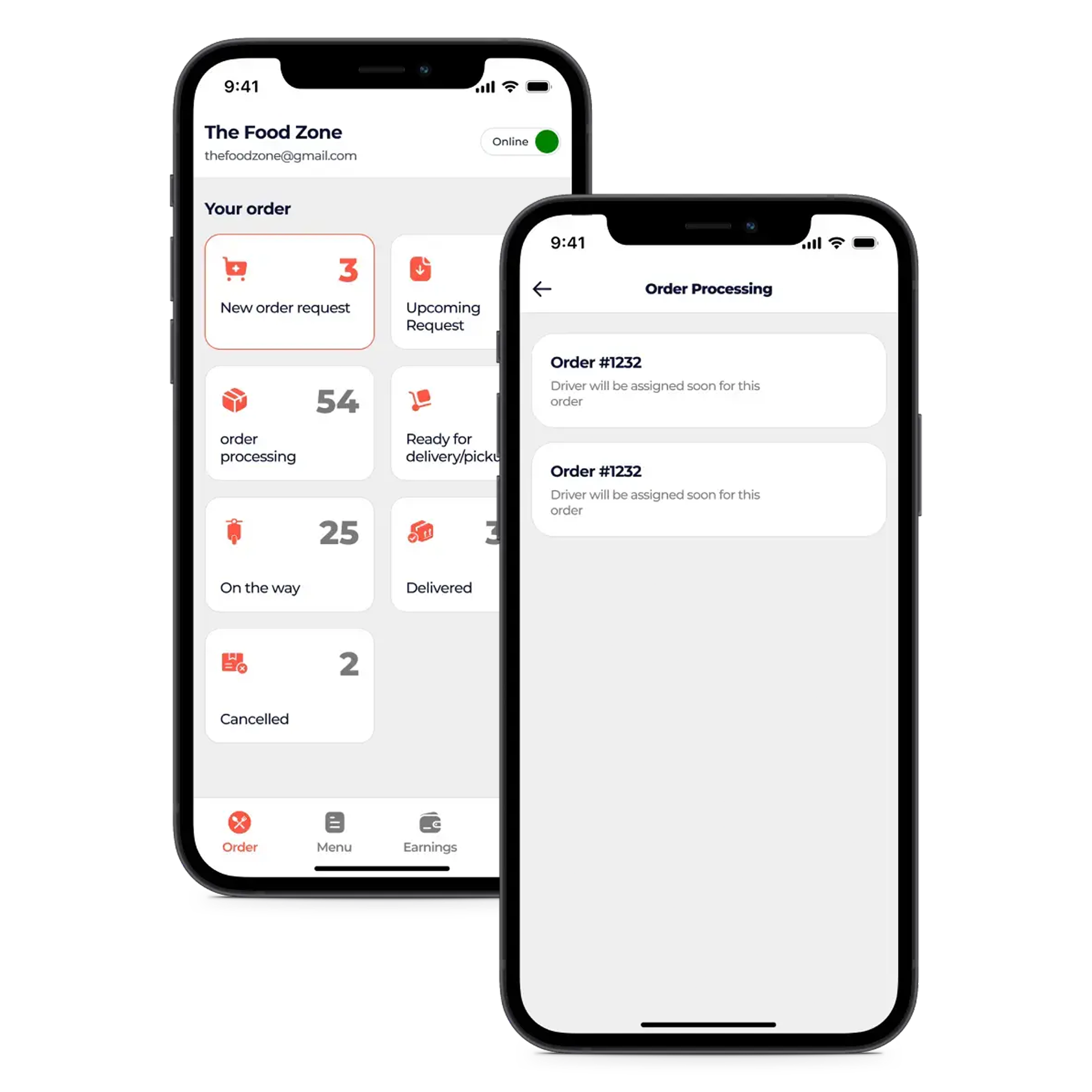
        Restaurant Panel Feature

        • Live Order View to monitor incoming, in-progress, and completed orders in real time.

        • Menu & Price Editor for quickly updating dishes, descriptions, and pricing.

        • Discount Engine to create, schedule, and manage promotional offers.

        • Delivery Settings to control service areas, timings, and delivery charges.

        • Revenue Dashboard with instant sales, earnings, and performance stats.
        Restaurant Panel Feature

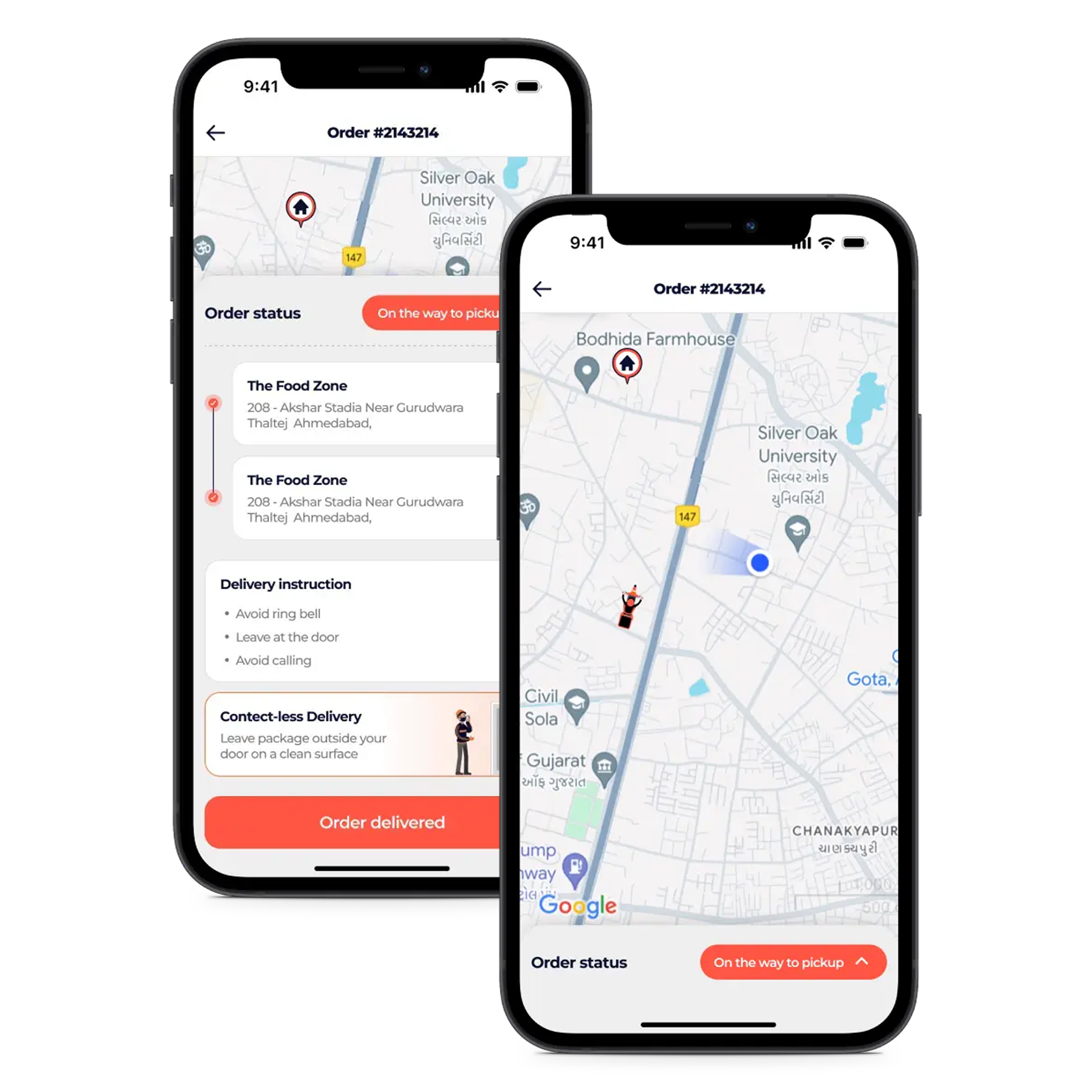
        Delivery Partner Feature

        • Instant Alerts for new orders, status updates, and important notifications.

        • Smart Navigation with integrated maps for fastest delivery routes.

        • Earnings Tracker to view daily, weekly, and monthly income.

        • Status Management to update availability and delivery progress in one tap.

        • Shift Toggle to go online or offline as per delivery schedule.
        Delivery Partner Feature

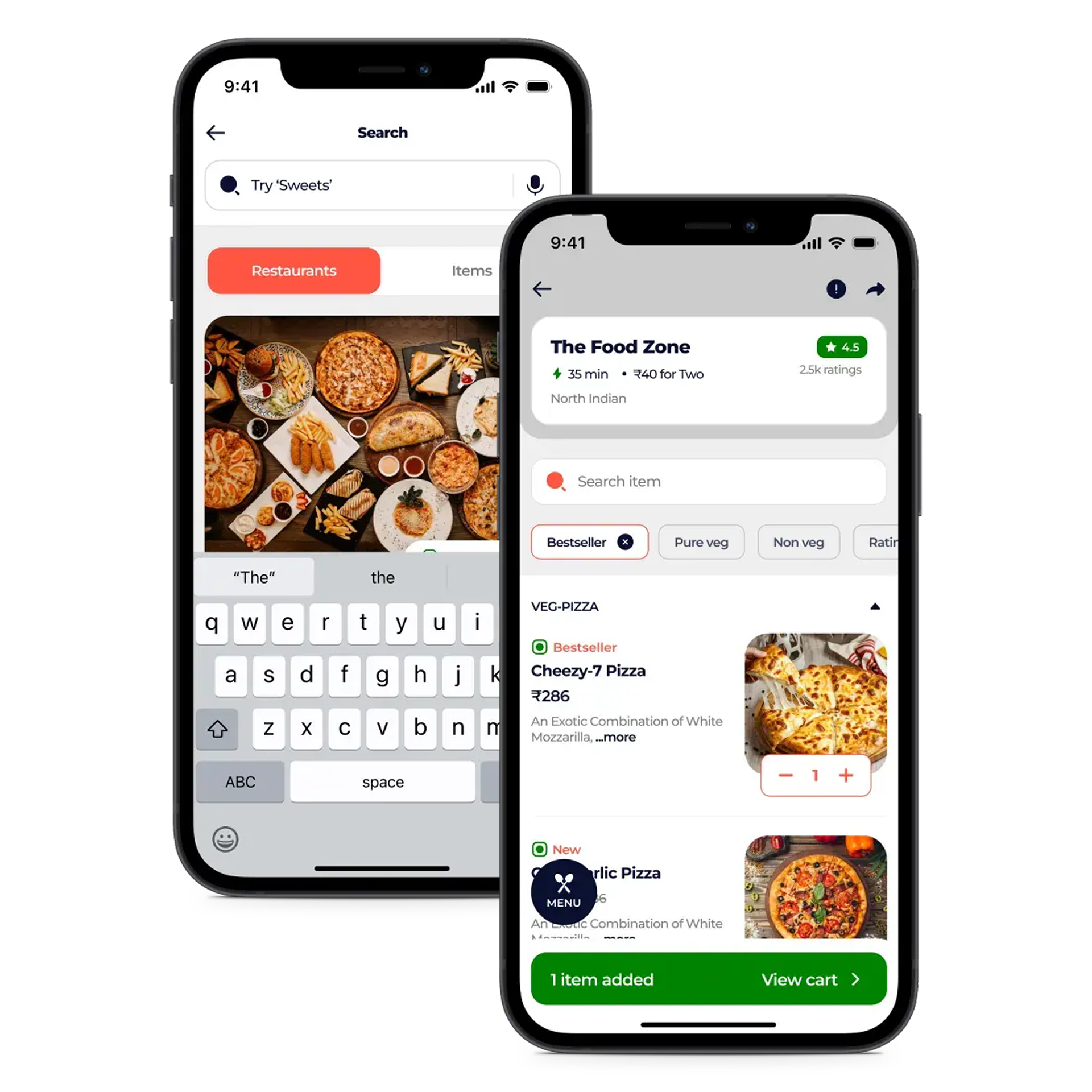
        Customer App Feature

        • Smart Location Detection  Accurately match with nearby restaurants and delivery options.

        • Intuitive Search & Filters  Quickly find meals by cuisine, price, or ratings.

        • One-Click Cart & Checkout  Review orders and pay securely in seconds.

        • Detailed Restaurant Profiles  View menus, ratings, and contact information easily.

        • Easy Custom Orders  Personalize dishes before placing your order.
        Customer App Feature